General
Elections in India: The power of the people
Introduction
It is the people, under the context of a democratic system, who provide the power to form and change the leadership through the instrument of elections. It is at this point that general elections present an avenue for understanding the whole aspect. We will discuss here, its working, the role of Rajya Sabha, and an account of why elections are important.
What are General Elections?
General category elections in India are national events that include electing their representatives to the Lok Sabha once every five years. Thus, the Lok Sabha elects 543 members representing constituencies.
These again are divided into two categories. In the Lok Sabha election, representatives are elected who further comprise the government in the parliament. And the state assemblies in which representatives are elected by the voters of the country for their respective states. In simple words, whoever manages to win the maximum number of seats in an election forms a government. And whoever happens to lead that party becomes the Prime Minister of India.
Procedure of Election
Now let’s break down the general procedure for election into simple steps:
There is a separate body the Election Commission of India, which declares the dates of general elections. Generally, general elections take some weeks in a number of phases so that the process of voting goes without problems.
Formation of Constituencies
There are 543 constituencies in India. In every constituency, there is one Member of Parliament or MP. A constituency represents some area in the country. People from that particular area have the right to cast their votes to represent them as well.
Political Parties and Candidates
Political parties choose a candidate for every election constituency. Some of the cases include independent candidates as well. They issue their manifesto; a list of promises and plans that the party wants to do if they win.
Election Campaigns
Candidates and parties strive hard for all those campaigning processes just to win the vote of the people. They go to all places, orates public speeches, and presents their promises to each and every person of the public. In such a time, voters are able to come across each and every candidate and their schemes.
Election Day
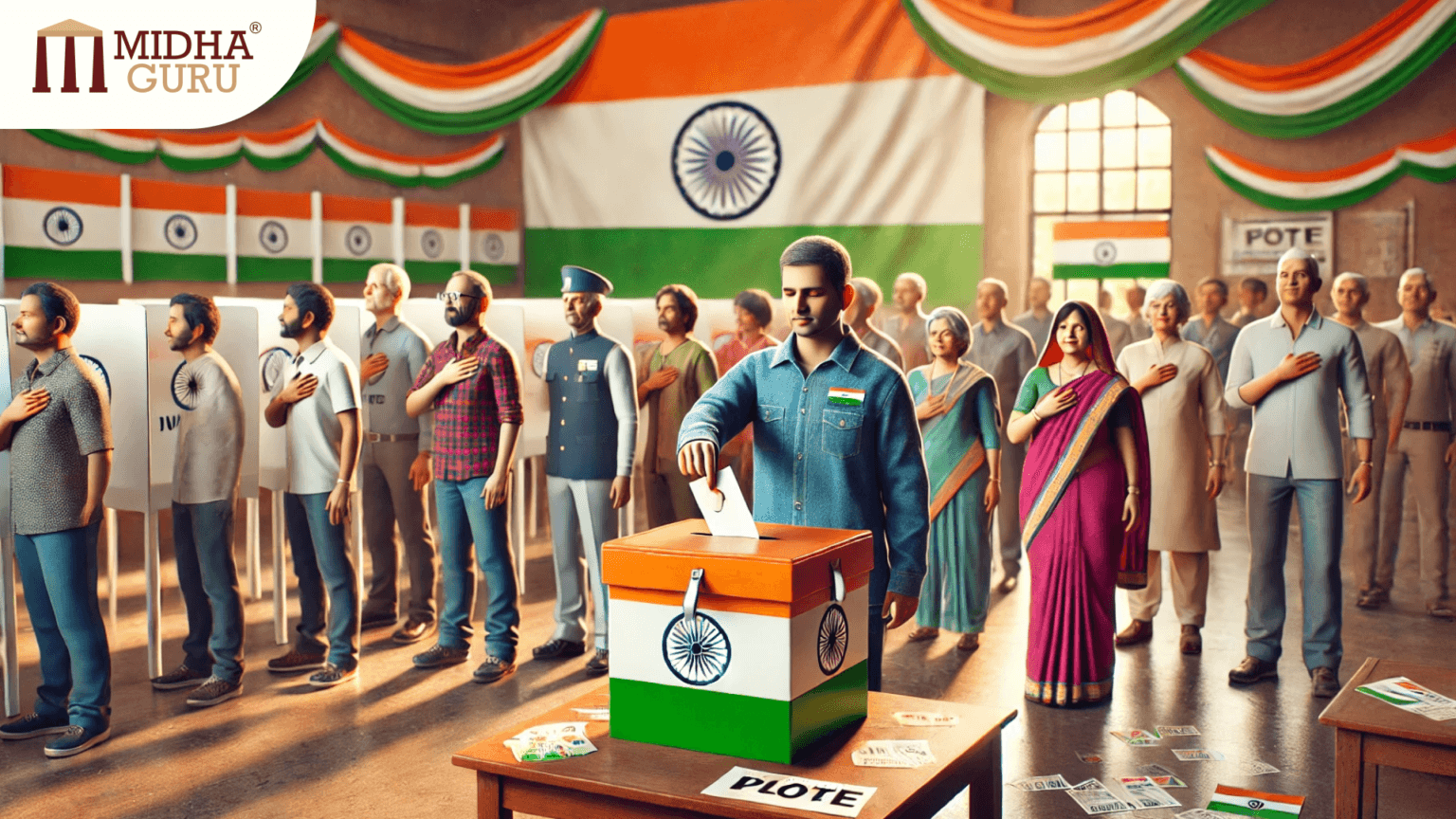
All eligible citizens above 18 years and who are eligible for voting report to their nearest booth on voting day. The identity card of a voter is proof of the right to vote. Electronic Voting Machines ensure that the voting will be honest and above board.
Formation of Government
It is, in most cases, the majority party or a coalition that forms the government. The leader of the majority party is the Prime Minister. it is the President of India who formally invites the majority party to form the government.
Model Code of Conduct In Election Phase
Model Code of Conduct is usually enforced amongst all the parties and contestants during the elections so that the total elections are conducted efficiently. The model code of conduct is an inter fundamental guide brought forth for holding elections in India by all parties and candidates, and its core objective is free elections.
What About the Rajya Sabha?
The Parliament of India consists of two Houses; the Lok Sabha, known as the House of the People and the Rajya Sabha, known as the Council of States. Obvi, the composition of the members is very different for Lok Sabha MPs and Rajya Sabha MPs. People choose Lok Sabha MPs directly whereas a direct voter does not elect Rajya Sabha MPs.
Electoral process in Rajya Sabha varies a bit as well. See for how:
Strength of Members
It has 245 members. The 233 members get indirectly elected by the elected members of the State Legislative Assemblies and Union Territories through the voting process called single transferable vote. Twelve of them are nominated by the President of India for their specializations in arts, literature, science, and social services.
Role of Rajya Sabha
It is a review body and gives suitable representation to the states. Lok Sabha represents directly the will of people, whereas Rajya Sabha represents the interest of states and makes sure there is a balance factor in legislations present.
Election Procedure for Rajya Sabha
The members elected to the State Legislative Assemblies have to elect the members of the Rajya Sabha. Here again, it is a system of proportional representation so that the seats are distributed on the strength of the parties in the state legislatures. Compared to the Lok Sabha, the members of the Rajya Sabha are for six years, and one third of them retire after two years.
Why General and Rajya Sabha Elections are Important
Lok Sabha and Rajya Sabha Elections both are crucial for the health of democracy in India. Why is it so? Lok Sabha Elections directly empower the people to have a say in their government, making them accountable to it through leaders.
Rajya Sabha Elections ensured that states had a voice in matters pertaining to the nation and helped review and refine laws passed by Lok Sabha.
Together, these elections help India maintain balance in power and give every citizen and state a chance to contribute to the country’s governance.
Who Can Vote?
Any citizen who has passed his age of being 18 and above with a proper registration to himself as an electorate can vote during general elections in India. Whether he is a rich man or a poor man, whether he is well educated or uneducated – every vote is counted equally, deciding the future course of action of this vast nation.
Complications with General and Rajya Sabha Elections
Elections in a country like India are quite challenging to deal with. Some of the complexities associated with the process of election are as follows:
Managing Huge Population
India has a huge population; therefore, it requires lot of planning and mobilization
Geographical Diversity
India has the worst diversity in relation to the landscape, from mountainous regions to vast deserts which makes it very tough to reach each region without much trouble.
Just Fairness
The Election Commission strives to the best to make sure that there is a safe passage of elections in a fair and clean manner, free of vote-buying tinge.
Conclusion
Like the grand festival of democracy, Indian elections have given the chance to the people to be a constituent in the decision-making process for the nation and let them elect their leaders who speak for the voice. That goes a long way in helping us realize our rights and responsibilities as citizens.
So the next time you listen to the news about elections, take note of how your vote and your leaders shape the face of the country.